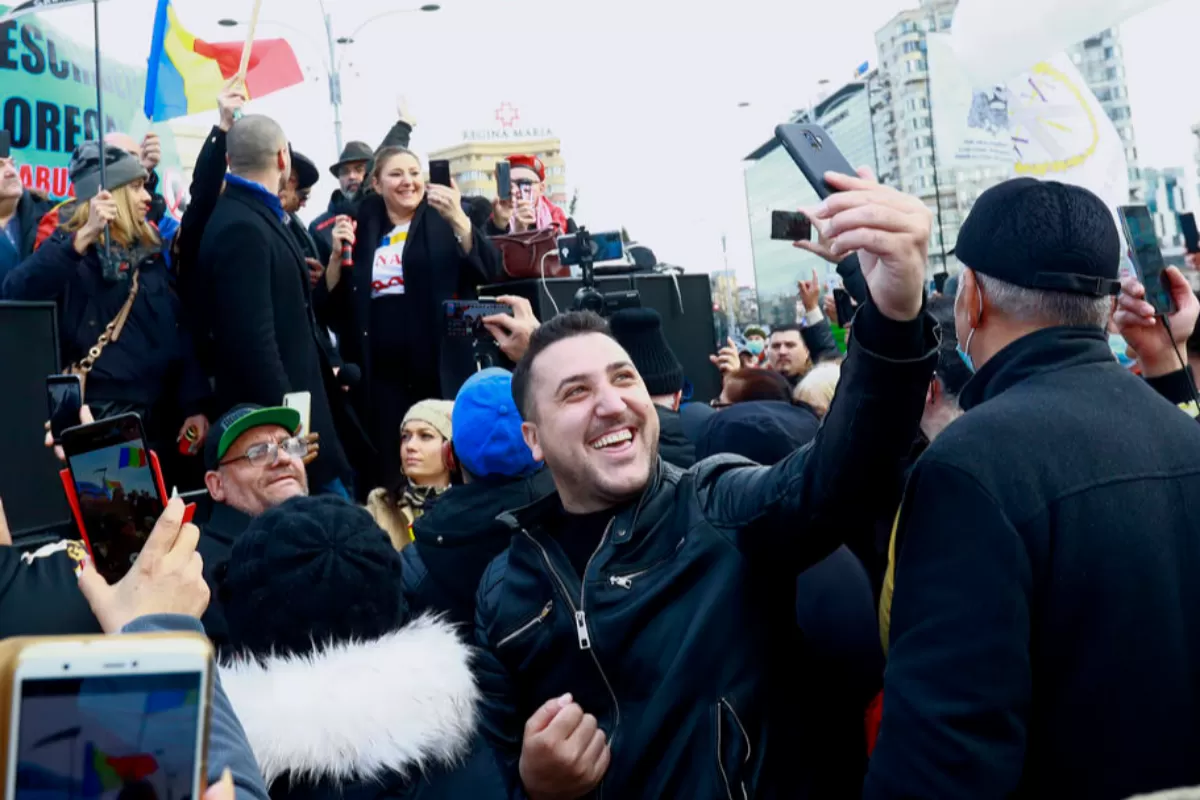
The anti-restriction protests triggered a real festival on Sputnik, the Kremlin's main Romanian-language propaganda tool.
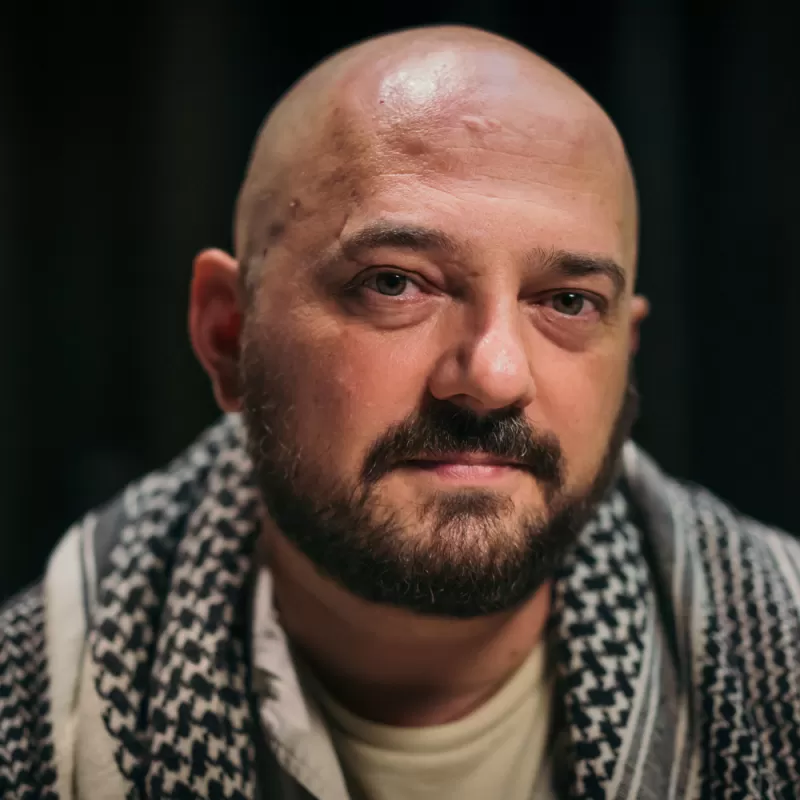
A hypothetical reader who wouldn’t have access to any other source of information could imagine, going through the Sputnik headlines of the week, that Romania is in the middle of a real revolution, with waves of anti-restriction protesters taking to streets for the sake of freedom. Influencers, activists, analysts or arguably genuine journalists - most of whom are rather self-proclaimed or termed as such by Sputnik - are present both on the street and on the website of the Russian publication, representing the spearhead of the revolution. They are also the ones who claim to speak on behalf of the market: "the well-known protester and influencer Oana Lovin" presents protesters’ demands, while "activist Dan Chitic" calls on President Iohannis to organize a referendum on returning to normalcy (because epidemiology is not a science, but a political issue, right?) or to resign. Chitic couldn’t possibly limit himself to tackling the fight against the medical dictatorship, he takes the time to also take a look at what is happening beyond Romania's borders. Therefore, he’s been able to notice that Ukraine is aggressing Russia (in the Donbass, i.e. also on the territory of Ukraine, but this is an irrelevant detail for the "activist") so a war could break out. The lawyer resumes the theories launched these days by Russia, which started to station troops near the borders of Ukraine - after conducting military exercises in Crimea - but accuses Kiev of allegedly preparing an offensive in the separatist east of Ukraine and warns NATO to stay out of it. The great Ukrainian mobilization is a Kremlin made up: what’s actually happening is the rotation of troops in the demarcation area, where when one brigade withdraws to rest, another one takes its place.
Coming back to the protests in Romania, it is not very clear what kind of popular uprising it is - a "well-known analyst" says that "it is the first time since 1907 that the country is on fire”, while "an activist for democracy and independent journalist" writes that “the polenta exploded", an expression that became popular during the 1989 Revolution. In fact, this is not the only reference to the Revolution that Sputnik makes - the mayor of Timisoara, Dominic Fritz, is directly compared to Ceausescu and there is a whole sub-narrative related to the protests in which authorities are accused of dictatorial tendencies. Not a word, though, about the more controversial organizers or participants in the protests, such as the deputy with criminal records from Oradea, the offender from Alba who was imprisoned for pimping, or the protesters who drew up blacklists of those who criticized them in Timisoara. Instead, the narrative of the authoritarian regime and its repressive apparatus was insisted upon, the emblematic case here being that of the young man from Brăila “collapsed in a pool of blood” who became “the symbol of resistance to police repression against Romanians”. The case of the beaten young man is real, and the police even started a criminal proceeding against the gendarme who allegedly assaulted him, but the authorities' version of what happened is radically different from the one presented by Sputnik: the "pool of blood" seems to have been, in fact, a scarf, and the young man was part of a group that attacked the police, who in turn intervened to detain the aggressors.
What is not yet very clear is how spontaneous this anti-restriction revolution is: the same Sputnik presents a conspiracy theory issued by the "well-known lawyer" and "one of the most active anti-system fighters" Ingrid Mocanu: the protests were intentionally provoked by the government, which is taking absurd measures in order to get people out into the streets, and thus divert their attention from its true evil plans.
It’s not that Sputnik is a nest of anarchists who desperately want people to take to the streets. There have been protests in Romania about which those who write for the Russian publication were a little less enthusiastic. On August 10, 2018, and the days that followed, for example, the Kremlin spokeswoman was ironic about the protesters, willing to take over and amplify the stories about a coup attempt and ready to find justifications for the gendarmes’ brutal intervention. A similar attitude was seen with regard to the anti-corruption protests and the #resist movement, also associated by the Kremlin with public enemy number 1, George Soros.
Obviously, when protests take place in Russia, Sputnik has a completely different approach. In January, tens of thousands of Russians took to the streets to show their support for Alexei Navalny, the activist who was detained and then sentenced to prison for leaving the country (in fact, he had been taken out of the country, in a coma, to be treated in Germany, after the FSB had poisoned him with Noviciok, but this is not the kind of information to appear on Sputnik). Thousands of protesters were arrested, which is just one of the methods used to deter demonstrations, which are banned under several regulations, including a decision on combatting the coronavirus pandemic. The few Sputnik articles that mention the protests without giving any details are written to promote the Kremlin's narratives too, such as the Americans meddling in Russia's internal affairs, which, according to the Russian MFA, is proven by the fact that the US embassy posted the protest route on the Internet, or that of police brutality in the West, much worse - of course - than Putin's.
The conclusion would be that in the world imagined by Sputnik, anti-pandemic restrictions in Russia are violated by anti-social elements that can be recognized by surgical masks and pro-democracy slogans. In Romania (and in the West) those who do not comply with the regulations regarding large groups are, instead, fighters for freedom. They, too, can be easily identified: they do not wear a mask and shout that doctors are thieves and murderers.