This year, whose end is right around the corner, I spent three summer weeks in Izmir and then almost a week in Athens, in December. I was accommodated in hotels with a similar level of service, located centrally. The details are relevant because I want to offer the readers a brief comparison between the two situations. They reflect, in fact, the current major differences between Greece and Turkey, two nations with very different political and economic developments, especially in the last decade. The comparison could serve as a useful example for those who are still wondering whether nationalist populism can be a solution to the economic issues facing society, or, quite the opposite, is a decisive contributor to the creation and perpetuation of such issues.
I have been friends with the owner of the hotel in Izmir for about fifteen years and he spoke to me at length about the business and the difficulties he had to deal with. In Athens, I did not meet the owner of that hotel, but I had occasional conversations with the management. In both cases, I asked similar questions about the various issues facing the two establishments. My aim was to try a comparison, hoping to reach relevant conclusions, and I think I was able to do that to some extent. Due to lack of editorial space, I will not include all the details of the comparison here, and I will focus on results and conclusions.
Erdoğan’s policies undermined Turkey’s economy
The owner of the hotel in Izmir has over four decades of experience in the hospitality industry (he owns three hotels and two restaurants) and confessed to me that for about 5-6 years he had been facing the most serious problems he had ever experienced. Before this difficult period, everything seemed to be going well. The global crisis of 2008 didn’t affect Turkey much, and even brought some benefits. The country had already gone through a crisis in 2001 but overcame it with the help of the IMF, through drastic democratic and economic reforms. Following the coming to power of the current regime in Ankara, in November 2001, continued reforms gradually led to an economic growth of over 8% even after the global crisis of 2008. The Greek neighbors were severely affected at the time, while the Turkish tourism flourished. Everything started changing after 2013, when the Turkish leaders adopted a discourse and policies hostile to the West.
Certain problems had existed since the years 2005-2006, when the budgets allocated to agriculture, a vital sector for the tourism industry in any country of the world, started to shrink significantly. To the current Ankara regime, construction and exports of industrial products, weapons in particular, vehicles and household appliances, were and have remained a priority. A dramatic turnaround was to be brought about by three major events in 2013. In the summer of that year, President Mohammed Morsi (a representative of the Muslim Brotherhood, backed by Erdoğan) was ousted from power in Egypt, and the police violently stifled the massive “Gezi protests” in the big Turkish cities. In December 2013, through the direct intervention of leaders of the Ankara regime, a massive case of corruption was covered up, and left uninvestigated by the Turkish judiciary to this day.
Erdogan believed that all those events were masterminded by the West and were signs of the West’s hostility towards him, so he adopted an extremely hostile public speech against the country's traditional Western partners. He thus inaugurated a process that would lead to close relations with Russia and China, doubled by huge investments in projecting influence over an increasingly radicalized Turkish diaspora, especially in Europe. The same leader was becoming increasingly aggressive with the West in disputes over areas such as the Aegean Sea and the eastern Mediterranean, Libya, northern Syria or the Azerbaijani-Armenian dispute. Such efforts, entailing high financial and political costs, were subject to a deeply anti-Western populist nationalist discourse. President Erdoğan's sovereignism in economic policies and the insistence on lowering interest rates seem to have followed the same logic, at least on a declarative level. His government is engaged in an " economic war of independence " in which former Western partners seem to have been irreversibly assigned the roles of enemies.
The result has been a huge and accelerated depreciation of the Turkish lira, of over 40% against the US dollar this year alone. This comes against the background of an official consumer inflation of over 20%, while at production level, inflation is approaching 55%.These developments, perhaps heralding hyperinflation, are accelerating the contraction of the internal market and increasing the shortage of products which are vital to the functioning of entire economic branches.
Political issues have had negative effects as well. Foreigners are increasingly aware that once they cross Turkey's borders, they could become targets of the current regime. In the last 5 years, there have been cases of foreign nationals arrested for publicly criticizing the government. Some were ethnic Turks with passports from other states, but non-Turkish foreigners were also put in delicate situations. Recently, an Israeli couple was arrested for several days for taking photos of the huge presidential palace in Ankara and only the intervention of the Tel Aviv authorities saved them. Such cases are forcing potential visitors to consider alternative destinations.
Against this background, the economic problems facing the Turkish hospitality sector are becoming more and more evident. First, the accelerated and unpredictable rise in prices for essential products, for daily consumption in a hotel or restaurant, from detergents to food and energy. And imports in general have become a major problem. For example, Turkey imports almost all the energy it consumes, at prices calculated in the medium and long term in foreign currency. Therefore, against the background of a rampant inflation, gas or electricity bills are increasingly taking over the profits in lira, which, in turn, is getting weaker by the day. This dramatic depreciation is gradually leading to a decline in stocks of imported raw materials and finished products. Agriculture and the food industry are probably the most affected, and that, in turn, directly affects the hospitality industry. As a major exporter of finished foodstuffs, Turkey has come to import enormously due to declining productivity amid rising inflation at production level and insufficient investment in agriculture. The negative trend has also been accentuated by the COVID-19 pandemic crisis.
In short, hotels have been built in Turkey for many years and the current regime has accelerated investment in this direction, but such constructions are likely to become useless. Ankara shows no sign of giving up its obsession with low-interests, which some legitimize by resorting to conservative religious principles. Stopping inflation will not be possible in these circumstances, and the war with the West, which has been repeatedly and clearly declared by the Turkish leader, makes it unlikely that the IMF will be called upon. It would come, as it did in 2001, conditioned by fundamental economic and democratic reforms, but the current power, trapped in its own derailment from the liberal-democratic norms, can no longer accept them. Instead, it prefers to follow the logic of its nationalist populist discourse, with anti-Western tendencies.
Greece: saved by the EU
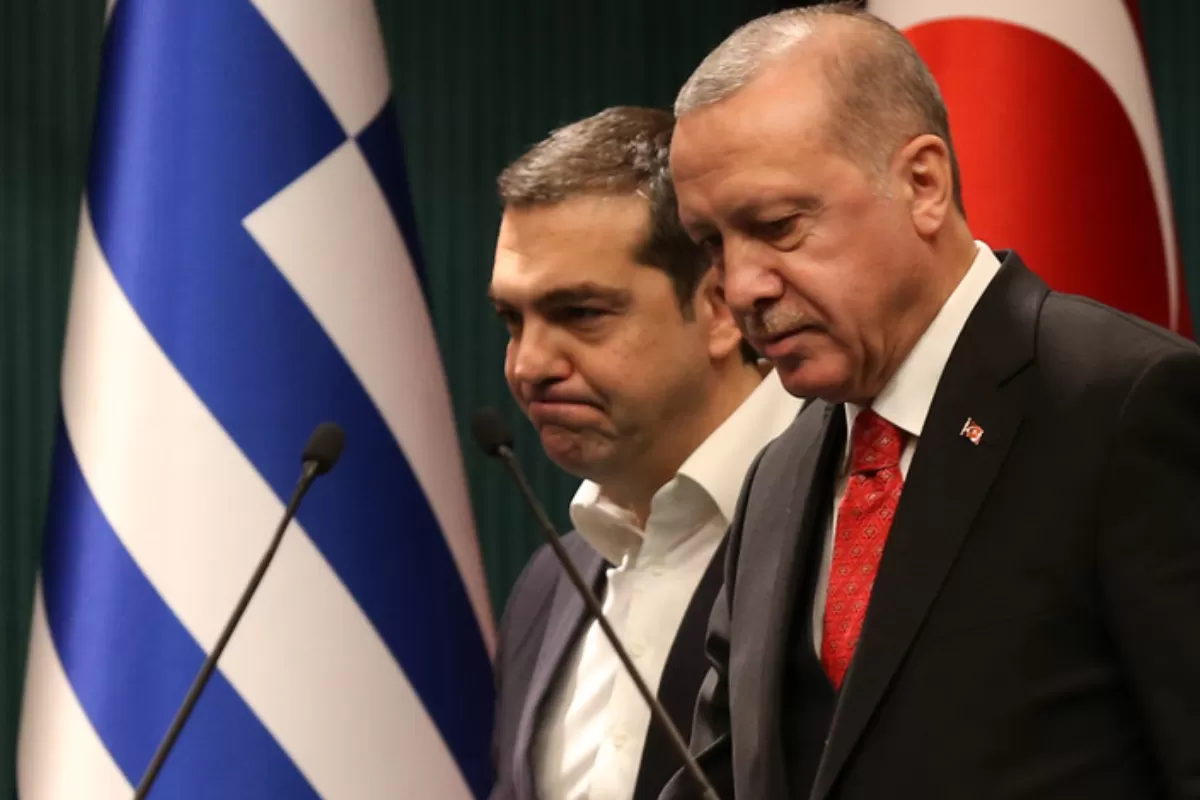
On the other side of the Aegean Sea, Greece was also faced with the temptation of a specific, sovereignist and anti-EU populism, when it was hit by the 2008 crisis. The then struggle for political power was marked by speeches that explicitly presented Angela Merkel as a new Hitler, an enemy of the Greeks, because she supported drastic reforms and tax increases as the only solution to save the country. The protests became violent and the political parties all seemed to surrender to populist logic. Among them was Syriza, the radical leftist group whose leader, Alexis Tsipras, then vehemently criticized the austerity policy imposed by the creditors financing Greece's bailout, the most important being the European Union.
After becoming prime minister, Tsipras started being faced himself with the country's serious issues and so he brought the tone of his speech and decisions down to a more moderate key. In the winter of 2014-2015, he and other politicians from the radical left camp stated clearly that Euroscepticism and Grexit (Greece's exit from the eurozone or even the EU) were not on their political agenda. During a visit to Izmir, as head of the government in Athens, Tsipras gave a speech at the university where I was working and where he enjoyed some popularity, as a highly publicized politician in the press of the time.
The speech was applauded, among other things, because the speaker honestly acknowledged the EU's crucial role in rescuing its country from bankruptcy, while wishing Turkey success on its European path. Back then, that was an increasingly popular and still tangible ideal for the young Turks. Unlike the Ankara government, however, the Tsipras-led coalition gave up anti-European populism. On the contrary, it supported and worked hard to keep Greece in the eurozone and implemented the reforms demanded by creditors. The country would thus overcome the peak of the crisis, now becoming an economy capable of sustainable growth , which promises to keep up the good work by accessing significant funds from the EU through the recovery and resilience program.
These favorable conditions give hope to the hotel managers in Athens. At the beginning of December, they boasted a room occupancy of over 60% and over 90% for the whole year 2021. Given the robustness of the euro, they are not faced with the specter of hyperinflation, as in the case of the hotel owner in Izmir. The prices of the products needed for hotels to operate properly do not rise sharply overnight and the business is not threatened by the huge production inflation that is already hitting Turkey. Tourists come to Athens without the fears of those, the undersigned included, who cross the border into its neighbor to the east.
As the COVID-19 crisis has affected everyone, the support received from the authorities will make the difference. In this regard, too, Athens has reasons to hope for the best, given their government's focus on vital and interconnected sectors such as tourism and agriculture, the digitalization of the administration and environmental policies. The EU's recovery and resilience program will also make a significant contribution to maintaining this focus, through appropriate budgets and fiscal policies.
The Chinese model: Erdoğan’s choice is not likely to be embraced by the Turkish people
People in Athens, therefore, have reasons to be optimistic, while my friend in Izmir has many reasons to be pessimistic, as he recently put it in a message. The Ankara regime has done everything in its power in recent years to undermine the relations with traditional Western partners and, in particular, Turkey's European path. At the same time, it continues to insist, according to a hard-to-understand logic, on lowering interest rates even as the lira is breaking historic devaluation records. The current developments are moving towards bankruptcy even construction projects , which have so far been favored by the regime. The most recent explanation provided by the President is that Turkey's “new economic model” is following the Chinese one. That is, the Turks will have to get used to the idea that they will work on low wages for massive exports. And, according to the Constitution approved by referendum in 2017, no institution and no citizen of Turkey may oppose the policies dictated by the President.
When I was writing this article, on the afternoon of December 16, the Central Bank of Turkey reduced the benchmark interest rate by 100 points to 14%, according to the Ankara leader's vision. Capital markets responded instantly and the Turkish Lira reached its worst performance against the US dollar and the euro. The Turkish media, which is overwhelmingly under the control of the political power, will probably continue to trumpet the “war of economic independence”, relying on the fact most people do not understand that no economy in this world can be independent precisely because it is in this world.
A symbolic answer comes from the heart of Anatolia. A family named Erdoğan had given their newborn the name Recep Tayyip in 2015 to express their support for their then idol. Their enthusiasm had meanwhile evaporated and so, at some point, they initiated procedures to change the child's name. Following a court ruling issued on December 6, the boy officially became Aras Erdoğan. The gesture is relevant for the rapidly declining popularity of the Turkish leader in recent years. The irrefutability of authority, firmly enshrined in the Constitution, and the adoption of a populist discourse do not guarantee any political actor long-term success. In the end, it is up to the citizens to decide whether or not a government make their lives better.