In the nearly thirty years that have passed since the fighting in Transnistria stopped, none of the successive governments in Chișinău has managed to solve this frozen conflict. Official policy in Chișinău dictates not to officially recognize the separatist regime in Tiraspol, although the main goal is to bring Transnistria back under the control of the central authorities (or to reintegrate the region) and to secure the withdrawal of Russian troops from this region.
Beyond official statements, the government of the Republic of Moldova has repeatedly taken political and economic actions in order to ensure the survival of the separatist regime. Either for political reasons, or simply out of fear, Chișinău has become an advocate of this regime rather than a sovereign state that should encapsulate and reintegrate a rebel territory. So far, this is also true of the current pro-European government.
In Brussels, the government is lobbying for a plant that is funding the separatist regime
The latest episode is tied to the Steel Plant in Râbnița (MMZ) in Transnistria. The Republic of Moldova has campaigned in Brussels to prevent the Commission from blocking scrap iron exports to this plant.
It all started with the European Union’s decision of November 17, 2021, when it adopted new rules to promote circular economy and tackle the export of illegal waste to third countries. This category of waste includes the scrap metal MMZ imports from the EU at a rate of 70%, particularly from Romania, the largest exporter of scrap iron to the steel plant in Transnistria.
Also worth mentioning is that the steelworks is by far the largest exporter from the separatist region, which also makes it a key contributor to the budget of Transnistria.
Accordingly, the EU’s decision seriously impacts the economic sustainability of the separatist regime. Tiraspol has launched a genuine propaganda campaign, blaming Chișinău for its current predicament. The leader of the separatist regime in Tiraspol, Vadim Krasnoselsky, has reiterated older allegations regarding what he has termed the “blockade” the Republic of Moldova has imposed on this region.
Chișinău was quick to lobby in Brussels so that the Commission’s decision should not be applied to the Republic of Moldova as well, and promised to make sure all scrap iron imports from the EU should observe all environment regulations. Of course, the Transnistrian MMZ would be the primary beneficiary of this exemption, at least for the time being.
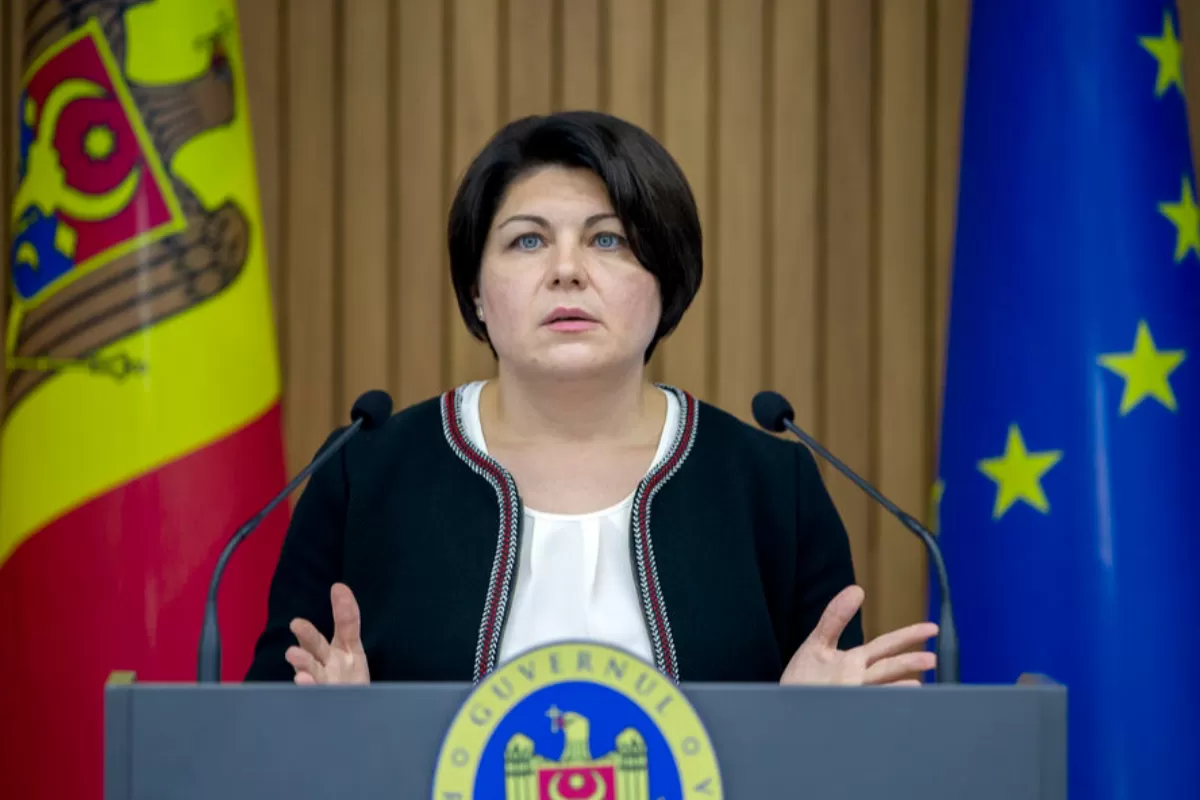
“We’ve acted in line with our national interest, which stipulates the protection of the Moldovan market and creating opportunities on the left-hand side of the Dniester”, Prime Minister Natalia Gavrilița said last Wednesday.
Natalia Gavrilița added that the MMZ steel plant in Transnistria will be able to continue operations as long as it obtains the appropriate environmental permits from the central authorities in Chișinău, thus making sure all the legal standards and provisions are observed on the ground. Exactly how the Government is expected to do that remains debatable, considering that in the last 30 years the regime in Tiraspol was free to govern its own territory, to a certain extent.
Before it comes to that, the Prime Minister was criticized because Moldova’s lobbying actually favors the steel plant in Râbnița, for the time being.
“To me, the formula suggested by Prime Minister Gavrilița came as a big surprise, arguing this company is a point of national interest. If we analyze all the aspects of this problem, we can see that the steelworks is primarily a source of income for the oversized Sheriff holding.
After Russian billionaire Alisher Usmanov renounced his majority share package at the Râbnița plant, the company underwent a shady privatization over 2002-2003. It was then transferred to the administration of the separatist regime in Tiraspol, which in turn signed it off to Sheriff. Since then, the majority package at MMZ has been handled by the holding via a number of executives, including from Kazakhstan”, the former ambassador of the Republic of Moldova in the USA and the director of the Chișinău-based IDIS “Viitorul” think-tank, Igor Munteanu, has told Veridica.
Expert: what was Chișinău promised in exchange for doing Tiraspol a favor?
The potential investors the Prime Minister alluded to have remained unnamed, but there are however domestic investors, such as the Omni Steel company, which is expected to build a small steel plant in Pănășești village, kilometers away from Chișinău. The plant is estimated to produce some 100-150,000 tons of steel, taking up approximately 30% of the annual scrap iron produced in the Republic of Moldova, tantamount to some 100,000 tons worth 40 billion USD.
Analyst Igor Munteanu argues Moldova’s request to the EU has economic consequences for the Republic of Moldova at present, because the Steel Plant in Râbnița is not a constitutional taxpayer, and thus is impervious to any inspection or government control.
“Approximately half of MMZ’s exports target Romania, which makes us wonder: who truly benefits from the Moldovan assistance provided to Transnistria’s businesses, which pay no taxes at a time when the Moldovan government needs all the income it can get its hand on in order to supplement its social security budget? We wouldn’t want our actions to reinforce the resistance of the separatist regime”, Munteanu went on to say.
The director of the IDIS think-tank also recalled that similar episodes occurred in 2018, when the then Filip Cabinet submitted a letter to the then Ukrainian president, Petro Poroshenko, listing MMZ as one the companies to be excluded from Ukraine’s business dealings.
“The key question, however, which arises is what does Moldova get in return for doing such a big favor to the Sheriff holding and to a major contributor to the separatist regime in Tiraspol? What did the corrupt politicians and elites of Transnistria promise Chișinău in exchange for this favor? Perhaps Prime Minister Gavrilița traded it for the withdrawal of Russian military forces from this region, although I know nothing of this scenario. Or maybe she demanded the demilitarization of Transnistrian forces as a tradeoff. We have no knowledge of this possibility”, the expert went on to say.
Chișinău’s gifts to Tiraspol: the lobby in Kiev and natural gas from Moscow
This is the third time the current regime lobbies for the regime in Tiraspol in less than six months since taking office in early August, 2021. More specifically, a similar intervention regarded the access to Ukraine of vehicles with Transnistrian license plates.
Starting September 1, 2021, Ukraine banned vehicles with Transnistrian license plates from entering its territory. Although for over two years Transnistrians were given the possibility to register their vehicles with the so-called neutral license plates, which enables them to travel freely across Europe as well, the people of Transnistria were reluctant to follow this procedure, and former deputy prime minister and the head of the Office for Reintegration, Vlad Kulminski, told the Moldovan Embassy to contact Kiev in order to have this restriction lifted. Ukraine refused, and the Ministry for Foreign Affairs in Moldova was shocked by Kulminski’s intervention in favor of Tiraspol, without grasping its true purpose.
Later that year, when the Republic of Moldova signed a five-year extension of its natural gas contract with Gazprom, Chișinău pledged to cover Tiraspol’s gas imports as well. Worth mentioning is that Transnistria accounts for nearly two thirds of Moldova’s total gas imports from Gazprom. Furthermore, for over 15 years, Tiraspol never paid a cent for Russian gas deliveries, which has accrued an 8-billion-dollar debt that certain members of the Russian State Duma regularly ascribe to Moldova.
Despite the fact that solving the Transnistrian crisis is not one of the top priorities that have earned the Action and Solidarity Party (PAS) a landslide victory in the July 2021 parliamentary election, the biggest problems, including a few media stunts, came precisely from Tiraspol. The absence of a clear strategy and a well-rounded vision with respect to this breakaway region seems to constantly erode Moldovan politics. For its part, Moscow has all the leverage and manpower it needs to cause great inconvenience to both PAS and the government. For that matter, Moscow noticed Chișinău’s reluctance to tackle the Transnistrian conflict head-on and its unwillingness to make it a top priority. For this reason, Moscow is skillfully using this region to its advantage in order to hold Chișinău at bay, never hesitating to resort to this pressure point in times of need.