Without using a search engine, quickly name three Israeli politicians of the last three decades. Undoubtedly, Benjamin Netanyahu would be your top choice. And that’s because he is. How did Bibi come to be politician who has been dominating Israeli top-level politics for over a decade? At first glance, one might say: he’s charismatic, speaks English, there’s a certain elegance about him and he’s not hot-tempered.
It would be a crude description of someone who has carefully crafted his career path.
Four elections in less than two years, and Netanyahu continues to come out on top and stay in power. In a world as difficult as today, with all the developments in the Middle East, in a society as complex as Israel, that is no easy feat. Still, Bibi, as most Israelis like to call him – or “King Bibi”, for his most ardent supporters – has succeeded even when the whole world was against him. And he’s now become the veteran (and survivor) of Israeli politics.
Politics veteran and war veteran
In the summer of 2011, I had the opportunity of meeting Benjamin Netanyahu in person for an interview. It was the year when Palestinians were calling for international recognition of the Palestinian state at UN level. “I’m an old hen at the UN. I served there as Israel’s ambassador for several years. The UN is what I call the flatterers’ society – the Palestinians can pass anything there”, Netanyahu told me at the time. “I’m an old hen…” These words sum up the fact that Netanyahu has been around in politics for so long that he knows everybody, from everywhere. And that’s because he never skipped ahead. Raised in the shadow of Benzion Netanyahu, his father, a close associate of the architect of revisionist Zionism, Ze'ev Jabotinsky, Benjamin studied in the United States. It was here, in high-school, that he started studying rhetoric, realizing that words can serve as a formidable weapon. He returned to Israel to enlist in the elite Israeli special forces Unit 260, better known as Sayeret Maktal. It is a top reconnaissance unit of the Israeli Directorate of Military Intelligence, charged with counter-terrorist operations. He was one of the commandos involved in operation Sabena (the name of the Belgian company whose passenger aircraft was hijacked by Palestinian terrorists in 1972) led by Ehud Barak. He was discharged from active service and returned to America to further his studies. He got an MA in political science from Harvard University. A year later, he returned to Israel to serve in the Yom Kippur War. Netanyahu’s political career began by his father’s side and continued on the benches of the best schools in America. He was deeply marked by the loss of his elder brother. Yonatan was killed in 1978 while leading one of the most spectacular commando missions in history: a hostage-rescue operation in Entebbe targeting an Air France flight hijacked by members of the Popular Front for the Liberation of Palestine. In his memory, Benjamin Netanyahu founded the Yonatan Netanyahu Anti-Terror Institute, which he chaired for two years. It around that time that he joined the major league. From here, it was just a short run to being appointed ambassador of Israel. From the UN tribune he charmed the press with his over-persuasive speeches. Now boasting a vast experience, he returned home at the end of his mandate and joined the center-right Likud Party, which he now leads.
The key to political longevity: old friendships and adaptability
Why the short biographical account? Because Benjamin Netanyahu’s eventful life is what made him into today’s powerful politician. Because it explains why, while everyone is holding their breath looking towards Washington, expecting the new Democrat president, Joe Biden, to undo what his Republican predecessor, Donald Trump did, the Israeli Prime Minister and president of Likud Party Benjamin Netanyahu keeps calm, smiles and says: “I know Joe Biden. We share a 40-year-old friendship that started when I was a diplomat in Washington and he was a Delaware Senator. We know each other. We agree on a great number of things and our bond is strong”.
Netanyahu is, indeed, a politics veteran, like many other heads of state and government. When you grow old alongside your peers, you hardly find anything still surprising. You, on the other hand, can provide the surprise!
4 election campaigns in just 2 years. 4 different concepts. The first two didn’t have a pandemic in the background, so the message of the campaign focused on the security of the state of Israel and strategic partnerships, while the United States’ support was substantial. The third election, held in March 2020, wouldn’t have been successful for Netanyahu if the pandemic hadn’t helped create a national solidarity government. Whereas after the 2019 election Benjamin Netanyahu was saying that “Israel needs a strong Government, a stable Government, a Zionist Government”, now, a year after the start of the pandemic, the same Netanyahu argues Israel needs a stable Government that shouldn’t exclude Arab parties. The same man who made it possible for Israel to sign unconceivable deals with Arab countries.
The survivor of Israeli politics
Nevertheless, during the last couple of years, Netanyahu has been facing opposition at street level, particularly after November, 2019, when the prosecutor general announced the indictment of the Israeli Prime Minister for corruption, fraud and abuse of office. The first acting Prime Minister in the history of Israel to be indicted. The Israeli law stipulates that any minister involved in a criminal prosecution must step down, but not the Prime Minister. This doesn’t confer him immunity from prosecution. He may continue to serve, but is being investigated. This prompted Netanyahu to seek the Knesset’s immunity at the end of 2019, being granted an unprecedented grace period by the prosecutor general himself. As a possible immunity would have put a serious dent in the already fragile ruling coalition, Netanyahu withdrew his immunity bid. His opponents turned the Likud leader’s run-ins with the law into an election campaign topic. But voters remained unimpressed, if you look at the numbers Netanyahu grabbed over the last couple of years.
Official data of the Israeli Election Committee clearly reveal that, no matter what happens, Benyamin Netanyahu gets to keep the hard core of his voters, accounting for roughly one million people, which is not bad if you consider the total number of 6.5 million eligible voters.
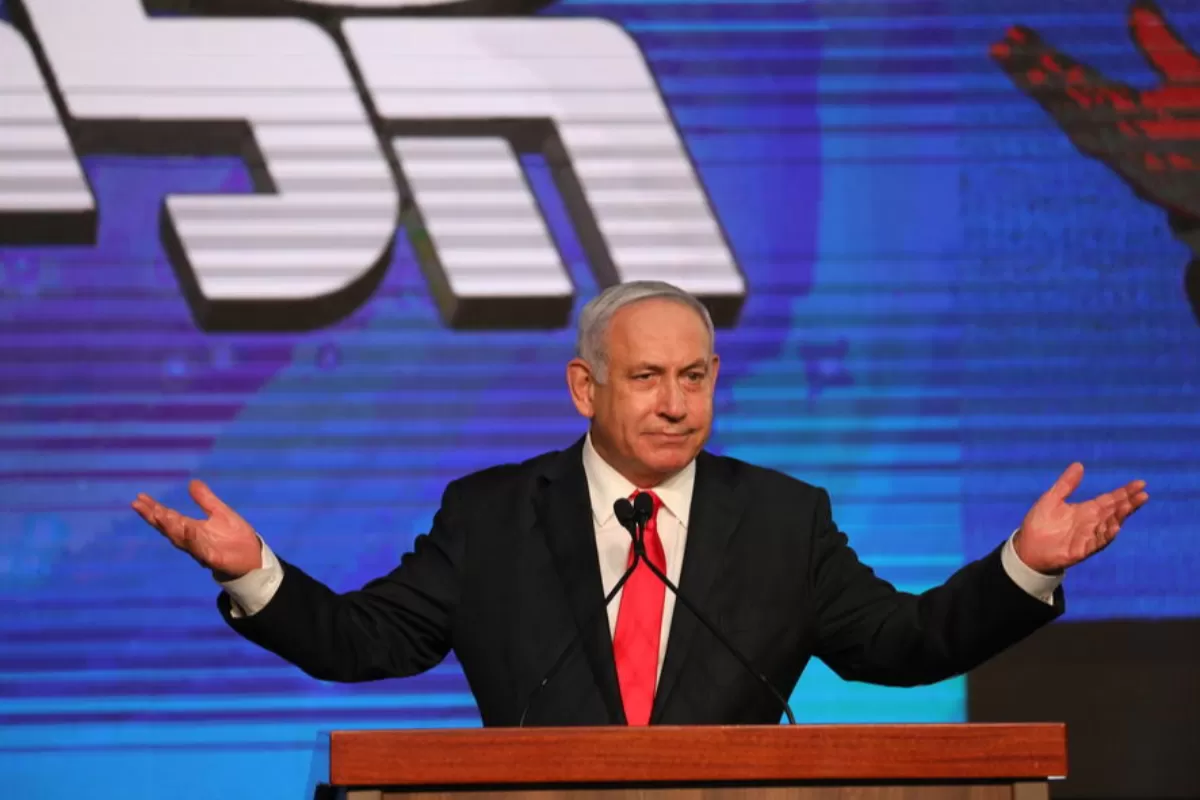
How does he do it? I think it’s simply because he can adapt to the social and political context so well, that no other Israeli politician has been able to challenge him, at least in the last 10 years. Israel’s political class is unable to produce another leader capable of matching Netanyahu’s ability. He navigated his last campaign against the epidemiological backdrop, introducing brutal restrictions, but also steering a vaccination campaign that has left the entire world in awe. Bibi and his staff have adapted on the fly. Public gatherings were replaced with face-to-face Facebook sitdowns. Then, Netanyahu roamed the country far and wide, laughing, eating and posing with his voters, talking and listening to the people.
Still, voter turnout this year dropped to the lowest level reported in the last two decades. This favors smaller parties that easily meet the election threshold of 3.5%. The political crisis overlapping the health crisis now raises serious questions regarding Israel’s election system. But the crisis does allow Benhamin Netanyahu to hold on to his seat and continue to pose as a benevolent father figure, despite facing corruption charges which he repeatedly denied.